Patients do not describe their symptoms in medical terminology. They say things like 'it hurts when I take a deep breath' or 'I have been feeling off for about a week.' These narratives are rich with clinical information but challenging for traditional health IT systems to process and utilize.
Natural language processing bridges this gap by translating patient stories into structured clinical data. The challenge lies in preserving the nuance and context of the original narrative while mapping it to medical concepts that clinicians and systems can act upon.

Medcol's NLP pipeline is specifically trained on healthcare dialogue. Unlike general-purpose language models, it understands medical context, recognizes symptom descriptions in colloquial language, and maps patient expressions to standardized medical ontologies like SNOMED CT and ICD-11.
The extraction process goes beyond simple keyword matching. Our system identifies temporal relationships (when symptoms started and how they progressed), severity gradients (mild discomfort versus debilitating pain), and associated factors (triggers, alleviating activities, and related symptoms) from natural conversation.
Accuracy is paramount. In clinical settings, a misinterpreted symptom can lead to missed diagnoses or unnecessary procedures. Medcol's models are validated against clinician annotations, achieving concordance rates that match or exceed inter-rater agreement among human medical scribes.
Clinical Summaries That Clinicians Trust
The output of Medcol's processing pipeline is not a raw data dump but a curated clinical summary designed to match how clinicians think. Chief complaints are highlighted, relevant history is surfaced, and potential differential diagnoses are suggested with appropriate confidence levels.

Traceability is built into every output. Clinicians can click on any extracted data point to see the original patient statement that generated it. This audit trail builds trust in the AI's interpretation and allows clinicians to make informed judgments about the reliability of specific data elements.
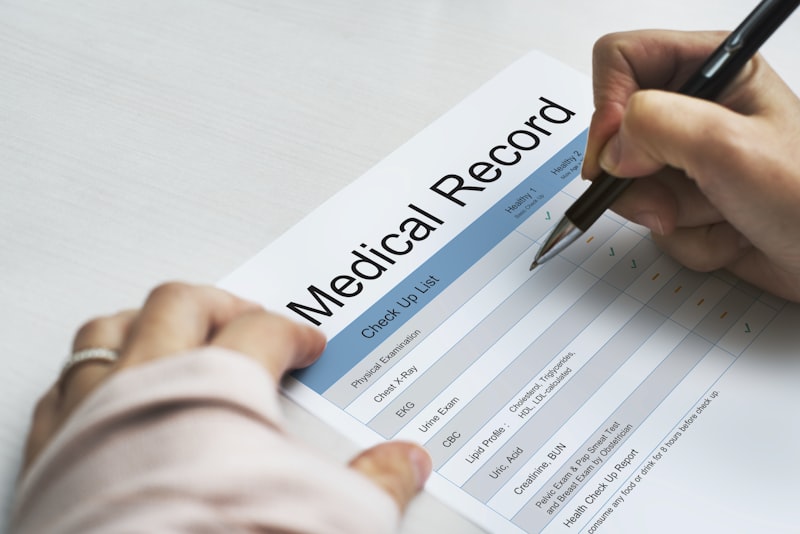
The structured data generated from patient stories also feeds back into population health analytics, quality improvement initiatives, and research databases. What begins as a single patient's narrative contributes to a growing body of evidence that improves care for everyone.